Stalinist Socialism
Soviet model consolidated by Stalin, marked by forced industrialization, agrarian collectivization, rigid central planning, a cult of the leader, and mass repression against real or suspected opponents of the regime.
Home / Ideologies / Stalinist Socialism
Soviet model consolidated by Stalin, marked by forced industrialization, agrarian collectivization, rigid central planning, a cult of the leader, and mass repression against real or suspected opponents of the regime.
In one sentence
I want a society under a strong leader and a single party, with agrarian collectivization, five-year plans and forced industrialization.
Political axes
Leans further toward autocracy than 96% of the 243 ideologies in the catalog.
Of all the axes, Representation is where it stands furthest from the rest.
On Morality, it sits close to the catalog median.
Here it shares common ground with most ideologies.
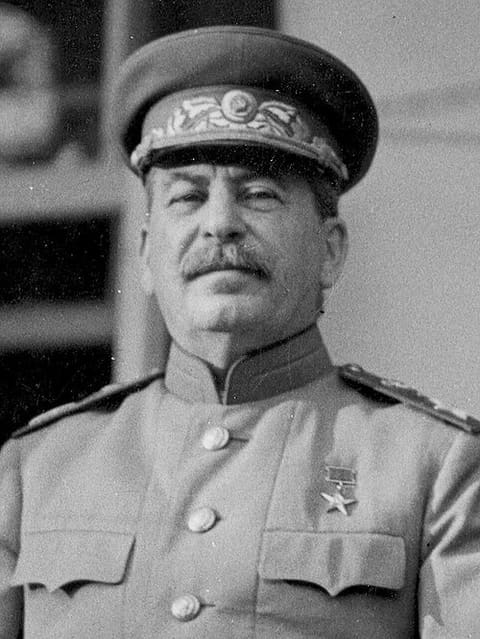
At the head of the Soviet Union, Stalin imposed forced industrialization, agrarian collectivization, and central planning, consolidating a single-party regime marked by purges, terror, and mass repression.
Closest, by dimension
Other compatible profiles
The most distant
Reference country
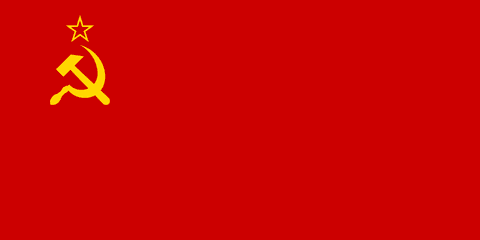
The world's first socialist state, the USSR was a single-party federation with a planned economy and centralized power, becoming a global superpower and the pole of communism during the Cold War.
Other close countries
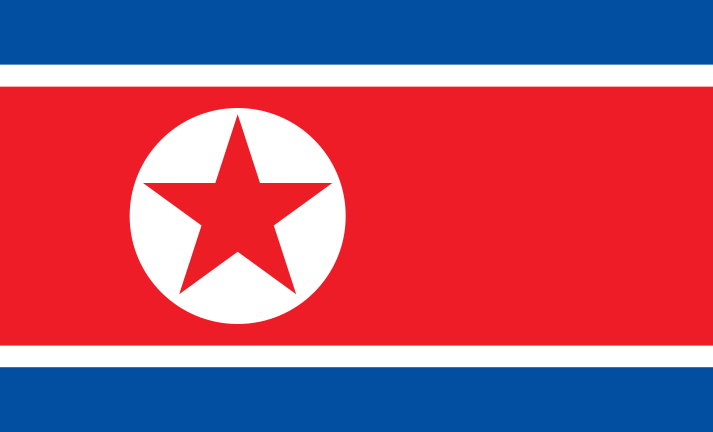
A totalitarian single-party state, North Korea maintains a planned economy, international isolation, and a cult of the Kim dynasty, uniting communism, nationalism, and the self-reliance doctrine known as Juche.
Also close, by dimension
The most distant
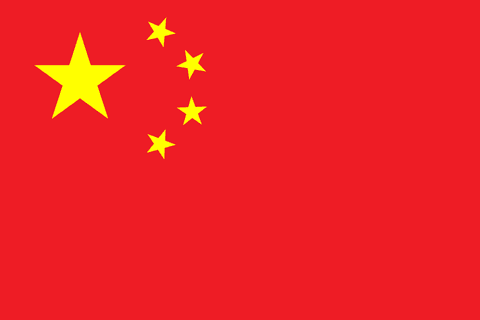
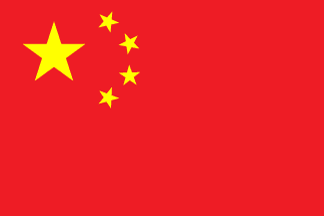
Under Mao, revolutionary China was a single-party communist state, with a collectivized economy and permanent mass mobilization, marked by campaigns such as the Great Leap Forward and the Cultural Revolution.
Also close, by dimension
The most distant
Ideological proximity
Closest within Radical Left
Current that combines a planned socialist economy with a strong national identity, prioritizing the sovereignty and interests of its own country over internationalism, often under personalist and centralized leadership.
North Korean doctrine formulated by Kim Il-sung that combines state socialism, national self-reliance, single-party rule, a cult of the leader, militarization, and rejection of external dependence, subordinating economy and society to the regime's sovereignty.
Auguste Blanqui's doctrine that a conspiratorial revolutionary minority should seize power and rule through a provisional dictatorship that expropriates the bourgeoisie, with militant atheism and distrust of elections and of spontaneous mass action.
Closest in other spectrums
Regime that fuses fascism's authoritarian aesthetics and hierarchy, with a strong leader, order and national discipline, to a socialist economy of collectivization, nationalized enterprise and central planning of the means of production.
Syncretic ideology, also called NazBol, that fuses revolutionary socialism and radical nationalism, combining a collectivist economy, state authoritarianism, and rejection of liberalism, the West, and bourgeois individualism.
An ultranationalist doctrine of national rebirth that rejects liberalism and Marxism, exalts the totalitarian state, regenerative violence and the leader cult, and treats the nation as a secular religion, with variants beyond the Italian regime that named it.
The most distant ideology
FederalismCenter24%