Corporatism
Model that organizes society into corporations of workers and employers integrated into the state, seeking harmony between classes and directed economic cooperation instead of conflict or free competition.
Home / Ideologies / Corporatism
Model that organizes society into corporations of workers and employers integrated into the state, seeking harmony between classes and directed economic cooperation instead of conflict or free competition.
In one sentence
I want a society organized into corporations of employers and workers integrated into the state, in directed harmony between the classes.
Political axes
Leans further toward religious than 82% of the 243 ideologies in the catalog.
Of all the axes, Religion is where it stands furthest from the rest.
On Economy, it sits practically at the catalog median.
Here it shares common ground with most ideologies.
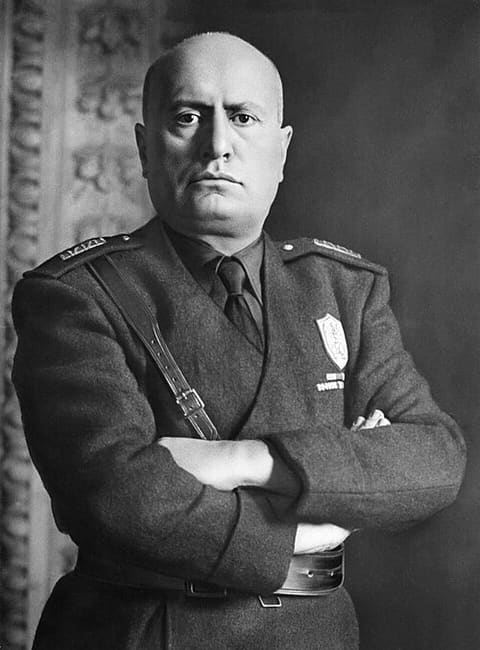
The creator of fascism, Mussolini ruled Italy as a totalitarian dictatorship built on a leader cult and a corporatist state. An atheist and anticlerical in his youth, he made the Church a political ally through the 1929 Lateran Pacts, more from expediency than faith.
Closest, by dimension

Other compatible profiles

The most distant
Reference country
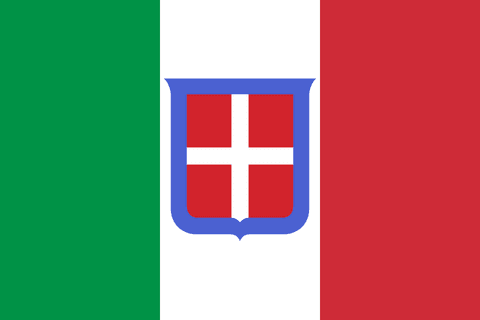
The birthplace of fascism, Mussolini's Italy was a totalitarian dictatorship that fused nationalism, a cult of the leader, a corporatist state, and militarism, suppressing opposition and seeking imperial expansion by force.
Other close countries

An Arab presidential republic, Egypt is governed by an authoritarian regime with heavy military weight, which prioritizes security and stability, controls the opposition, and directs much of the economy through the state.
Also close, by dimension

The most distant
Under Vargas, Brazil experienced a nationalist, developmentalist regime that promoted state-directed industrialization, labor legislation, and the centralization of power, laying the foundations of Brazilian labourism.
Also close, by dimension


The most distant
Ideological proximity
Closest within Third Position
Justicialist doctrine of Juan and Eva Perón uniting political sovereignty, economic independence and social justice, with CGT unions, nationalizations, protected industrialization, social Catholicism and a charismatic leader above parties.
Authoritarian nationalist movement that emerged in 1930s Brazil, with a Christian and corporatist base, the motto God, Fatherland and Family, mass aesthetics, and frontal opposition to liberalism and communism.
Nationalist and syndicalist current that rejects liberalism and Marxism, advocating national unity, corporatist organization of labor, authoritarian social justice, and popular mobilization around the state.
Closest in other spectrums
Ideology advocating the political unity of Muslims above national borders, around the ummah and the ideal of a caliphate, formulated by Jamal al-Din al-Afghani and adopted by Ottoman sultan Abdul Hamid II against European colonialism.
Christian theocratist doctrine that subordinates political power to religious authority, holding that divine law and the Church should govern the state and customs, from medieval and papal ultramontanism to modern reconstructionist projects.
Current that mobilizes the people against political and cultural elites, combining nationalism, immigration restriction, traditional values, public religion, strong security, and anti-establishment economic pragmatism around personalist leaders.
The most distant ideology
Crypto-AnarchismLibertarian20%