Kropotkinian Anarchism
Current of Peter Kropotkin that sees mutual aid as a law of nature and proposes federated communes, integration of farming and industry, science serving all and an ethics of solidarity without the state.
Home / Ideologies / Kropotkinian Anarchism
Current of Peter Kropotkin that sees mutual aid as a law of nature and proposes federated communes, integration of farming and industry, science serving all and an ethics of solidarity without the state.
In one sentence
I want free communes federated by mutual aid, joining field and factory, with everything shared by need and no state at all.
Political axes
Leans further toward federal than 87% of the 243 ideologies in the catalog.
Of all the axes, Structure is where it stands furthest from the rest.
On Control, it sits practically at the catalog median.
Here it shares common ground with most ideologies.
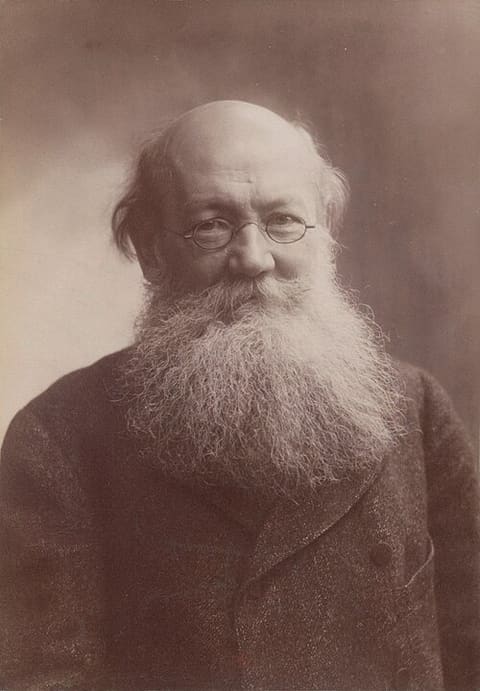
A Russian anarchist theorist, Kropotkin developed anarcho-communism and the idea of mutual aid as a factor of evolution, defending a stateless society based on cooperation, science, and free association.
Closest, by dimension
Other compatible profiles
The most distant
Reference country
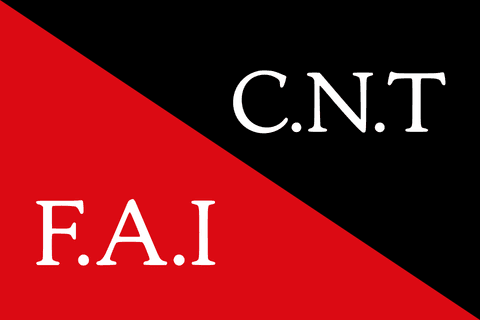
During the Spanish Revolution, regions of Aragon and Catalonia lived an anarchist experiment of collectivizing land and factories, with workers' self-management and social organization without a central state.
Other close countries
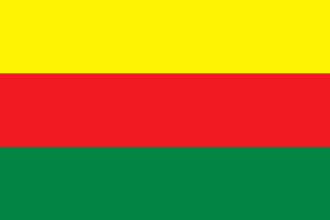
An autonomous region in northern Syria, Rojava organizes itself through democratic confederalism, with local self-management, gender equality, ethnic pluralism, and ecology, inspired by the libertarian ideas of Abdullah Öcalan.
Also close, by dimension
The most distant
During the Spanish Revolution, regions of Aragon and Catalonia lived an anarchist experiment of collectivizing land and factories, with workers' self-management and social organization without a central state.
Also close, by dimension


The most distant
Ideological proximity
Closest within Anarchist
Current that pursues socialism without an authoritarian state, uniting collective ownership and self-management with broad individual freedom, organized from the bottom up by free communities and workers.
Current that unites anarchism and communism, proposing a society without state or private property, with collective production and distribution according to need, based on free association and mutual aid.
Synthesis of anarchist currents centered on the liberation of body and identity, uniting the critique of patriarchy and of gender and sexuality norms with an openness to technology as a tool of emancipation, all under the rejection of the state, capitalism, and every imposed hierarchy.
Closest in other spectrums
Democratic Marxism inspired by Rosa Luxemburg, which unites revolution and freedom, values the spontaneity of the masses and the general strike, and criticizes both reformism and the authoritarian centralism of vanguard parties.
Movement that places unions and workers' organization at the center of politics, defending collective bargaining, direct action, and labor control over production as the path to working-class emancipation.
Current that values indigenous peoples and their rights, defending autonomy, territory, culture, and political participation, along with development models and a plurinational state that respect their traditions.
The most distant ideology
Authoritarian NeoliberalismRight26%